Wired That Way: Understanding Your Personality Can Transform Your Relationships
Have you ever wondered why you can connect effortlessly with certain people while communicating with others feels like a constant struggle?
Why does one person thrive on schedules, details, and organization while another is more spontaneous and frequently misplaces their keys? Why do some people naturally take charge while others prefer to work quietly in the background?
According to bestselling author and personality expert Marita Littauer, many of these differences can be better understood by learning how each person is uniquely wired.
On this episode of the Women on the Rise segment of the BFF Empowerment Podcast, I had the pleasure of speaking with Marita about her bestselling book, Wired That Way, which is celebrating its 20th anniversary. We discussed personality types, emotional needs, relationships, publishing, purpose after retirement, and the importance of using our life experiences to empower others.
A Family Legacy of Writing and Empowerment
Marita is the author of 20 books, but writing and publishing were already part of her family’s legacy. Her mother, Florence Littauer, wrote approximately 40 books and helped open the door for Marita to publish her first book in her early twenties.
Although Marita did not originally dream of becoming a writer, she possessed a skill that a publisher recognized. That opportunity eventually developed into a long and successful writing career.
Her most successful book, Wired That Way, brings together decades of teaching about personality types and explains how that knowledge can be applied to relationships, parenting, communication, work, and personal development.
As an author who has self-published 15 books since 2016, I could definitely relate to Marita’s writing journey. We discussed the differences between traditional publishing and self-publishing, including the increased freedom independent authors have to decide what they publish and when they publish it.
Self-publishing may require authors to manage more of the financial and production responsibilities themselves, but it also provides creative control. An independent author can publish three books in one year, one book in several years, or change directions without being restricted by a traditional publishing contract.
Even traditionally published authors are now expected to participate heavily in marketing and promotion, making self-publishing an increasingly practical option for many writers.
Creating Your Best Life After 60
In addition to her work surrounding Wired That Way, Marita is also involved with The Best Life Project, a blog created for women over 60 who want to live fulfilling, active, and purpose-driven lives.
This stage of life can bring major transitions. Children may have moved away from home, careers may have ended, and the responsibilities that once shaped a woman’s daily life may no longer be present.
After spending decades focused on children, family, and work, some women reach retirement and begin asking:
“Who am I now?”
“What am I supposed to do next?”
“Where do I find purpose outside of my career or my role as a mother?”
The Best Life Project provides ideas, inspiration, and practical instruction from women over 60 who are continuing to learn, grow, contribute, and enjoy life.
Retirement does not have to mean becoming inactive or irrelevant. It can be the beginning of an entirely new chapter filled with writing, traveling, volunteering, mentoring, gardening, entrepreneurship, creativity, and community involvement.
As Marita humorously explained, she may technically be retired, but between podcast interviews, radio appearances, blogging, and celebrating her book’s anniversary, she sometimes wonders how she ever had time to work.
The Four Basic Personality Types
The foundation of Wired That Way is an exploration of four basic personality types. Most people are not completely represented by one category. Instead, they possess a blend, with one or two personality types appearing more strongly.
Popular Sanguine: Yellow
The Popular Sanguine personality is outgoing, enthusiastic, fun-loving, expressive, and naturally drawn to people.
These individuals often bring energy into a room. They enjoy conversation, social interaction, new experiences, and opportunities to connect with others.
Because they are often spontaneous, they may also struggle with organization, schedules, consistency, or remembering small details.
Marita identifies strongly with this personality type and described herself as an eternal optimist.
Powerful Choleric: Red
The Powerful Choleric personality is driven, goal-oriented, decisive, confident, and comfortable taking charge.
These are often the natural leaders, bosses, entrepreneurs, organizers, and problem-solvers of the world. When they see something that needs to be done, they are likely to step forward and make it happen.
However, their determination can sometimes be interpreted as impatience, bossiness, judgment, or a lack of sympathy for those who do not move at the same speed.
Marita suggested that I likely possess several Powerful Choleric characteristics because of the many projects, businesses, creative ventures, and advocacy initiatives I manage.
When Popular Sanguine and Powerful Choleric traits are combined, the person can become what Marita calls “turbocharged”—outgoing, ambitious, energetic, and highly productive.
That combination can be powerful, but it can also overwhelm people who function at a different pace.
Perfect Melancholy: Blue
The Perfect Melancholy personality is thoughtful, detailed, analytical, organized, sensitive, and committed to doing things correctly.
These individuals are often perfectionists. They appreciate structure, accuracy, schedules, planning, and high-quality work.
Their attention to detail can be a tremendous strength. However, perfectionism may also cause them to overthink, become overly critical, or struggle when something does not meet their expectations.
Peaceful Phlegmatic: Green
The Peaceful Phlegmatic personality is calm, comfortable, patient, easygoing, and typically content to remain in the background.
These individuals are often pleasant to be around because they are not usually demanding or confrontational. They may be excellent listeners, loyal friends, and stabilizing forces within families and workplaces.
However, they may sometimes avoid making decisions, taking initiative, or addressing conflict because they prefer peace and predictability.
The Popular Sanguine and Powerful Choleric personalities are generally considered more extroverted, while the Perfect Melancholy and Peaceful Phlegmatic personalities are typically more introverted.
Extroverts are often energized by people and activity. Introverts may enjoy people but need solitude to restore their energy.
Neither way is wrong. They are simply different.
Understanding Yourself Is Only the Beginning
One of the most important lessons from our conversation was that personality education should not stop with understanding yourself.
Knowing your personality can help you recognize your strengths, weaknesses, communication habits, emotional needs, and natural responses. However, the real transformation often happens when you begin using that knowledge to understand other people.
When Marita entered the workforce as a teenager, she found herself interacting with people she would not have naturally chosen as friends.
That is a reality many of us experience at work. As children, we can simply avoid playing with someone we do not like. In adulthood, we may have to work beside, report to, supervise, serve, or collaborate with people whose personalities are completely different from ours.
By identifying a person’s likely personality type, Marita was able to adjust her expectations.
For example, when you understand that someone is naturally less organized or frequently runs late, you can prepare accordingly instead of repeatedly becoming surprised and angry.
Understanding does not mean excusing disrespectful or harmful behavior. It means recognizing which behaviors may come from personality differences rather than automatically assuming negative intentions.
Stop Giving People Only What You Want
Most of us were taught the Golden Rule: Treat others the way you would like to be treated.
That is an important foundation, but relationships often require us to go one step further.
We must learn to treat people in ways that reflect what they need—not only what we would want in the same situation.
We commonly give love, encouragement, support, and recognition in the form that feels most meaningful to us. However, the other person may have completely different emotional needs.
One person may need verbal appreciation.
Another may value practical assistance.
One person may want frequent communication and connection.
Another may need quiet time and personal space.
One person may view detailed feedback as helpful.
Another may experience that same feedback as constant criticism.
This is where personality types share similarities with the concept of love languages. Both encourage us to recognize that people do not receive affection, support, or communication in identical ways.
Once we understand someone’s personality and emotional needs, we can become more intentional about how we communicate with them.
That knowledge can strengthen marriages, friendships, professional relationships, parenting approaches, and community connections.
Recognizing Personality Through Everyday Clues
In Wired That Way, Marita also explores how personality traits may be observed through everyday clues, including:
- Clothing choices
- Body language
- Mannerisms
- Communication styles
- Personal spaces
- Organization habits
- Decision-making patterns
These observations are not meant to place people into rigid boxes.
Personality tools should provide a starting point for understanding—not a permanent label that limits someone’s ability to grow.
A naturally disorganized person can learn organizational strategies. A quiet person can become a confident public speaker. A strong leader can learn greater patience and empathy. A perfectionist can learn to offer themselves and others more grace.
Our personalities may influence us, but they do not prevent us from maturing.
Personality Education for Students and Families
Our conversation also turned toward how personality education might benefit children and teenagers.
Young people are still discovering who they are, how they learn, what they enjoy, and how they relate to others. Age-appropriate personality resources could help students recognize their strengths without making them feel that they must change who they are to succeed.
Marita shared information about Smarter, Not Harder, a shorter resource designed primarily for middle-school students. It addresses study skills and teaches students how to work with their natural personality traits rather than constantly fighting against them.
This immediately connected with the mission of my No Limits Girl Empowerment App, a platform designed to encourage and empower blind and visually impaired girls.
I created No Limits Girl because I did not have that kind of support when I became blind at 15. I had to learn how to navigate many experiences, develop confidence, and discover my own capabilities without the resources I wish had been available to me.
The platform helps bridge the gap between what girls may learn from school, family, and formal services and the personal confidence they need to pursue greater independence.
It includes stories, activities, educational resources, confidence-building tools, and features such as Crowned Academy, which teaches areas including public speaking, poise, self-presentation, hygiene, appropriate behavior, and social confidence.
Resources that help young people understand their personalities could be another valuable way to remind them that being different does not mean being wrong.
Choosing Purpose Over Self-Pity
One of the most meaningful moments in our conversation occurred when Marita acknowledged how I have chosen to use my life experiences to benefit other people.
We all have a personal journey.
We cannot always control what happens to us, but we can decide what we will do with what happened.
I have experienced blindness, childhood trauma, difficult relationships, single motherhood, discrimination, and circumstances that could have caused me to give up on myself. Instead, I made the decision to transform those experiences into advocacy, writing, music, empowerment, education, and resources for others.
I did not have experience raising children when I became a mother. I had never even changed a diaper or cared for a baby. However, I figured it out one day at a time.
Today, my son is seven years old, thriving, growing, and enjoying life.
Our circumstances may influence our journey, but our choices help determine where that journey takes us.
We can repeat cycles of trauma, or we can work to break them.
We can allow painful experiences to convince us that our lives have no purpose, or we can use what we learned to make someone else’s road a little easier.
Choosing purpose does not mean denying the pain. It means refusing to let the pain have the final word.
Doing Our Part to Live at Peace
Before ending our conversation, Marita shared Romans 12:18:
“If it is possible, as far as it depends on you, live at peace with everyone.”
She explained how the verse can be understood in three parts.
“If it is possible” reminds us that peace will not always be possible because we cannot control everyone else.
“As far as it depends on you” reminds us that the only person we can truly control is ourselves.
“Live at peace with everyone” gives us the responsibility to do our part.
Understanding personality types can become one of the tools we use to fulfill that responsibility.
We may not be able to change another person, but we can become more aware of our own behavior. We can adjust how we communicate. We can manage our expectations. We can become more patient. We can learn to meet emotional needs that are different from our own.
How Are You Wired?
Learning about your personality is not about placing yourself into a box.
It is about discovering what you naturally do well, identifying areas where you can grow, and learning how to build healthier relationships with people who do not think, communicate, or respond the way you do.
You are not wrong because you are different.
The people around you are not automatically wrong because they approach life differently.
We are all wired in unique ways, and those differences can either create conflict or become opportunities for greater understanding.
The difference often begins with our willingness to learn.
Remember: Understanding who you are is powerful, but learning how to understand others can transform your life.
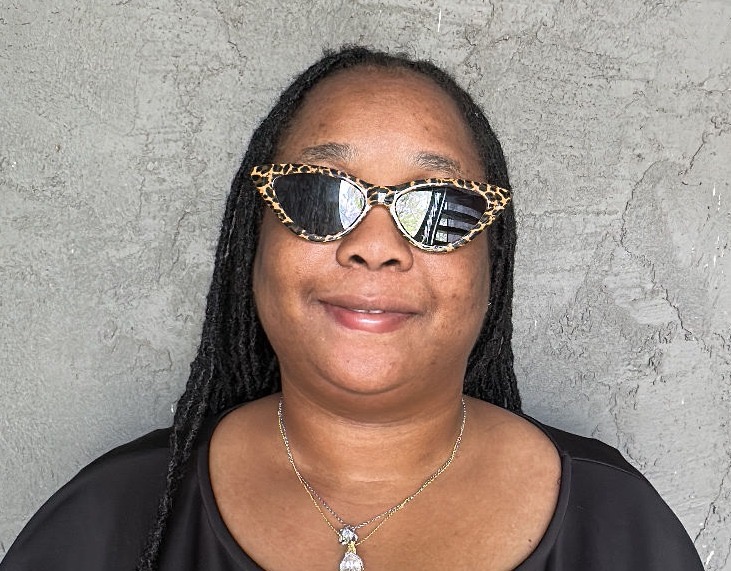
Author/Poet/Motivational Speaker/Entrepreneur/Podcast Host/Pageant Titleholder/Advocate/Women's Empowerment Coach/Mom
Blaque Diamond is a powerhouse of resilience, creativity, and purpose. Known as a motivational speaker, award-winning author, poet, podcaster, and advocate, she has transformed a life marked by adversity into a mission rooted in empowerment, visibility, and hope.
Blind since the age of 15 due to childhood abuse and medical neglect that resulted in irreversible retinal detachment, Blaque Diamond refused to let her circumstances define her limitations. Instead, she embraced her journey with courage and faith, earning the nickname “No Limits” for her unwavering belief that obstacles are not stop signs—but stepping stones.
Also being a survivor of sexual abuse and a 2x time domestic violence survivor, marred her life with strife and tested her endurance and ability to bounce back, but those traumas that were meant to break her only further harden her. Making her unbreakable.
She is a 15-time published author, having written books across multiple genres including memoir, poetry, urban fiction, and children’s literature. Several of her works have received national awards, further solidifying her voice as one that both challenges and inspires. Her writing is deeply personal yet universally relatable, often centering themes of healing, self-worth, survival, and triumph.
Beyond writing and self-publishing books,, Blaque Diamond is also a songwriter, having released 3 R&B EP’s with music that reflects emotional depth, vulnerability, and growth. Each creative outlet she touches becomes another avenue for storytelling and empowerment.
As the host and creator of … Read More