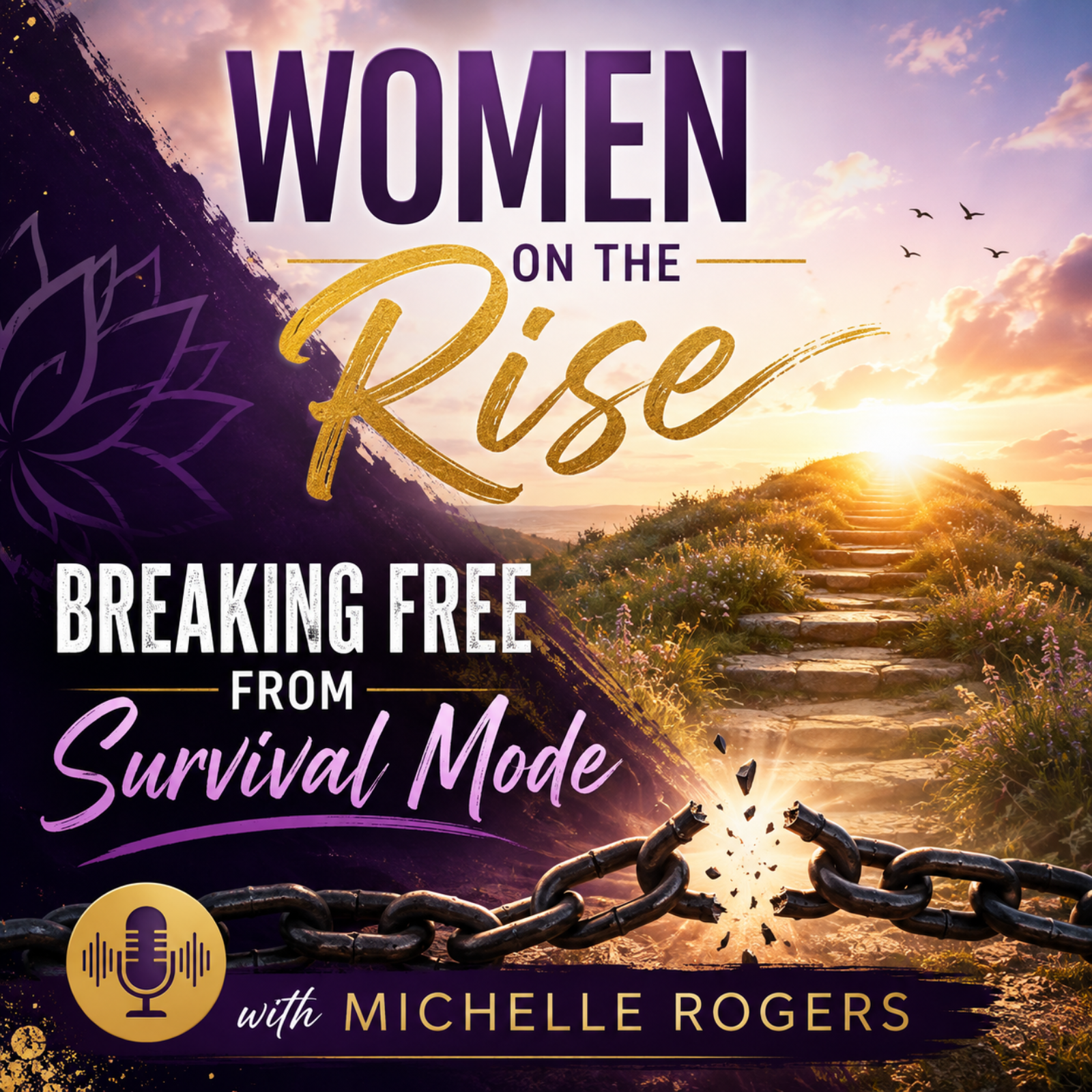
How Michelle Rogers Turned Trauma Into Purpose
There comes a point when simply surviving is no longer enough. You want peace. You want healing. You want to understand who you are outside of everything you’ve endured.
During a powerful Women on the Rise conversation on the BFF Empowerment Podcast, I sat down with entrepreneur, author, resilience coach, and creator of The Resiliency Blueprint, Michelle Rogers. Our conversation went far beyond business and success. We talked about trauma, relationships, boundaries, motherhood, blended families, autism, foster parenting, entrepreneurship, healing, and what it really means to build a new life after spending years in survival mode.
When Survival Mode Becomes a Way of Life
Michelle understands survival mode because she has lived it.
She shared how experiences from childhood affected the way she viewed herself and the relationships she entered as an adult. She experienced feeling worthless, survived an abusive marriage, went through divorce, and reached extremely low points in her life.
One of the most powerful things about healing is recognizing that experiences from decades ago can continue influencing the decisions we make today.
Through therapy and examining her own trauma, Michelle began understanding those connections. That awareness helped her realize something important: although she could not change what happened to her, she could make different choices moving forward.
Sometimes healing begins when we stop asking only, What happened to me? and start asking, How is what happened to me still affecting me today?
Discovering That You’re Allowed to Have Dreams
Michelle’s life began changing when her now-husband asked her two questions: What did she want to do with her life, and what were her hopes and dreams?
Those may seem like simple questions, but they weren’t simple for someone who had spent so much time thinking about what everyone else wanted from her.
As women, we can become accustomed to being everything to everybody. We’re mothers, partners, caregivers, employees, business owners, friends, and problem-solvers. We become so busy meeting everyone else’s needs that sometimes we forget we’re allowed to have needs, desires, and dreams of our own.
Michelle discovered that one of her interests was real estate.
She and her husband started by purchasing a condemned property for $10,000. They worked nights and weekends while maintaining their jobs and eventually renovated the home and rented it to a woman with children.
That first opportunity grew into more.
Michelle now runs multiple businesses, and many of them share something in common: they were created because she identified a need and decided to do something about it.
There’s a lesson in that for aspiring entrepreneurs. Your next business idea doesn’t necessarily have to begin with trying to invent something nobody has ever seen before. Sometimes you simply have to pay attention to a problem people are already experiencing and ask yourself how you can help solve it.
A Partner Should Be a Partner
One of my favorite parts of our conversation was hearing Michelle describe the relationship she has with her husband.
She talked about a genuine partnership.
They recognize each other’s strengths. They divide responsibilities. Her husband notices when she’s overwhelmed and asks what he can do to help. He encourages her to make time for herself, and they work together when caring for their family.
That opened the door for a very personal conversation about my own experiences with relationships.
I shared how I once entered a relationship believing two single parents were coming together to create a family. Instead, after we moved in together, I began feeling like I was parenting my child, his children, and a grown man.
That wasn’t partnership.
There is a huge difference between wanting someone to rescue you and wanting someone to share life with you.
If you already know how to do everything alone, the purpose of having a partner shouldn’t be to give you another person to take care of. Both people should contribute to the relationship and household they are building together.
Boundaries Protect Your Peace
Michelle brought up another lesson that every woman needs to understand:
Your boundaries are for you.
We sometimes think setting a boundary means telling another person what they must do. But ultimately, we cannot control another adult.
We can communicate.
We can explain our needs.
We can give someone opportunities to change.
But eventually, their actions reveal whether they are willing to respect what we have communicated.
I experienced this personally. I gave chances for improvements to be made in my relationship, but the same behaviors kept returning.
At some point, I had to recognize that I couldn't turn someone into the person I needed them to be.
That’s where following through on boundaries becomes important.
Protecting your peace may require walking away from something you once desperately wanted to work.
And walking away doesn't necessarily mean you failed.
Sometimes it means you finally listened to yourself.
How Foster Parenting Led Michelle Back to Her Own Healing
Later in life, Michelle and her husband decided to become foster parents.
They were eventually placed with a five-year-old boy who was nonverbal, had experienced significant trauma, and was later identified as autistic.
Parenting him required Michelle to approach behavior differently.
Rather than automatically viewing difficult behaviors as defiance, she had to consider whether there was an unmet need underneath them.
That process caused her to examine her own experiences.
While learning how to support a child who had experienced trauma, Michelle found herself confronting parts of her own trauma that still needed healing.
There is something powerful about that.
Sometimes the people who enter our lives and need something from us unknowingly reveal the places within ourselves that still need attention.
The Resiliency Blueprint: Being Seen, Safe, and Heard
Michelle’s experiences ultimately contributed to the creation of The Resiliency Blueprint, which she describes as a life guide to being seen, safe, and heard.
The blueprint grew from the steps she used while rebuilding herself after some of the lowest periods of her life.
Her experiences were no longer simply things that happened to her.
They became knowledge she could use to help someone else.
That doesn’t mean we should be grateful for trauma or pretend painful experiences were somehow good. It means that after something has happened, we still get to decide what we do with the life we have ahead of us.
There is a difference between surviving and healing.
Survival says, I made it through.
Healing asks, Now that I made it through, how do I want to live?
Building a Future for Adults With Developmental Disabilities
Michelle’s foster son also inspired another major vision: OK Ranch.
As an older parent raising a young child with developmental needs, Michelle began thinking about his future.
What happens when parents and caregivers become elderly?
What happens after they die?
Who makes sure their adult children continue having meaningful, supported lives?
Michelle described OK Ranch as a community designed to provide adults with developmental disabilities with opportunities for independence, services, activities, connection, and purpose.
Her vision includes elements such as gardening, animals, equine-related activities, community programs, medical support, and opportunities for residents to remain engaged rather than simply existing without meaningful activities.
Once again, something deeply personal revealed a larger need.
And Michelle decided to explore how she could help fill it.
You Don't Know What the Next Ten Years Will Bring
Our conversation became especially meaningful when we talked about getting older, relationships, children, and grieving the timelines we once imagined for ourselves.
There are times when we look at our age and start calculating.
I thought I would be married by now.
I thought I would have another child.
I thought my career would look different.
I thought I would own a house.
I thought I would be further along.
But life doesn't always follow the timeline we created in our heads.
Michelle reminded me that at 37, she could not have predicted what her life would look like at 50.
She found a healthy partnership.
She built businesses.
She became a foster parent.
She created a program from her healing journey.
She developed a vision for helping adults with developmental disabilities.
Her life continued evolving in ways she couldn't necessarily see coming.
That's why we have to be careful about declaring that it's "too late" simply because something hasn't happened yet.
Sometimes You Don't Want to Thrive—You Just Want Peace
During our conversation, I shared something that I believe many people who have experienced repeated adversity will understand.
Sometimes you get tired.
When your entire life has felt like overcoming one thing after another, you may reach a point where you aren't interested in proving how strong you are anymore.
You just want peace.
And there is nothing wrong with making peace part of your definition of success.
You don't always need another battle to overcome.
You don't always need another relationship.
You don't always need to chase something.
Sometimes your next season needs to be about healing, raising your children, enjoying what you've built, rediscovering yourself, and allowing life to unfold without forcing it.
Breaking Free From Survival Mode
Michelle Rogers' story demonstrates that breaking free from survival mode doesn't happen because the past suddenly disappears.
It happens when you begin recognizing that the past no longer gets to make every decision about your future.
You can set boundaries.
You can walk away.
You can start over.
You can build something.
You can discover new purpose.
You can love again—or decide you're perfectly content focusing on yourself for a while.
You can grieve the future you once imagined while remaining open to a future you haven't imagined yet.
Most importantly, you can stop counting yourself out.
Your life five or ten years from now may look completely different from the life you're living today.
So if you're currently in a season where you're simply trying to survive, don't assume this chapter is the entire story.
Keep healing.
Keep growing.
Keep protecting your peace.
And remain open to the possibility that everything you've survived may have prepared you to create something meaningful with everything that comes next.
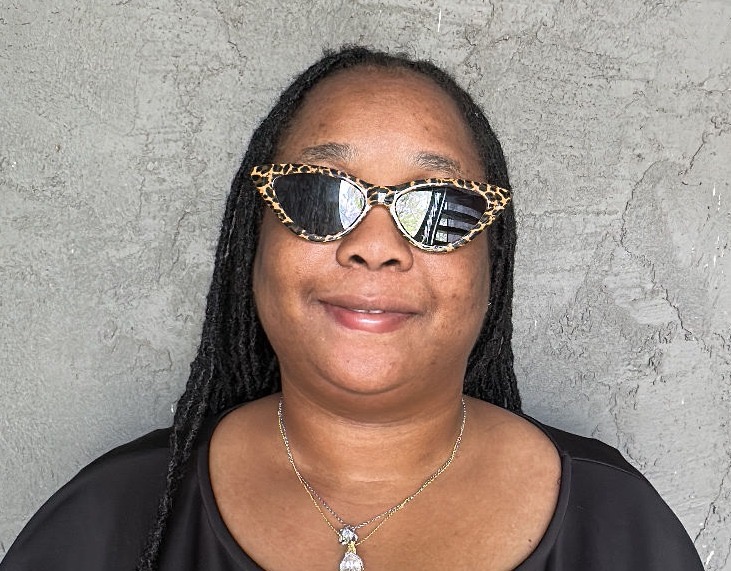
Author/Poet/Motivational Speaker/Entrepreneur/Podcast Host/Pageant Titleholder/Advocate/Women's Empowerment Coach/Mom
Blaque Diamond is a powerhouse of resilience, creativity, and purpose. Known as a motivational speaker, award-winning author, poet, podcaster, and advocate, she has transformed a life marked by adversity into a mission rooted in empowerment, visibility, and hope.
Blind since the age of 15 due to childhood abuse and medical neglect that resulted in irreversible retinal detachment, Blaque Diamond refused to let her circumstances define her limitations. Instead, she embraced her journey with courage and faith, earning the nickname “No Limits” for her unwavering belief that obstacles are not stop signs—but stepping stones.
Also being a survivor of sexual abuse and a 2x time domestic violence survivor, marred her life with strife and tested her endurance and ability to bounce back, but those traumas that were meant to break her only further harden her. Making her unbreakable.
She is a 15-time published author, having written books across multiple genres including memoir, poetry, urban fiction, and children’s literature. Several of her works have received national awards, further solidifying her voice as one that both challenges and inspires. Her writing is deeply personal yet universally relatable, often centering themes of healing, self-worth, survival, and triumph.
Beyond writing and self-publishing books,, Blaque Diamond is also a songwriter, having released 3 R&B EP’s with music that reflects emotional depth, vulnerability, and growth. Each creative outlet she touches becomes another avenue for storytelling and empowerment.
As the host and creator of … Read More