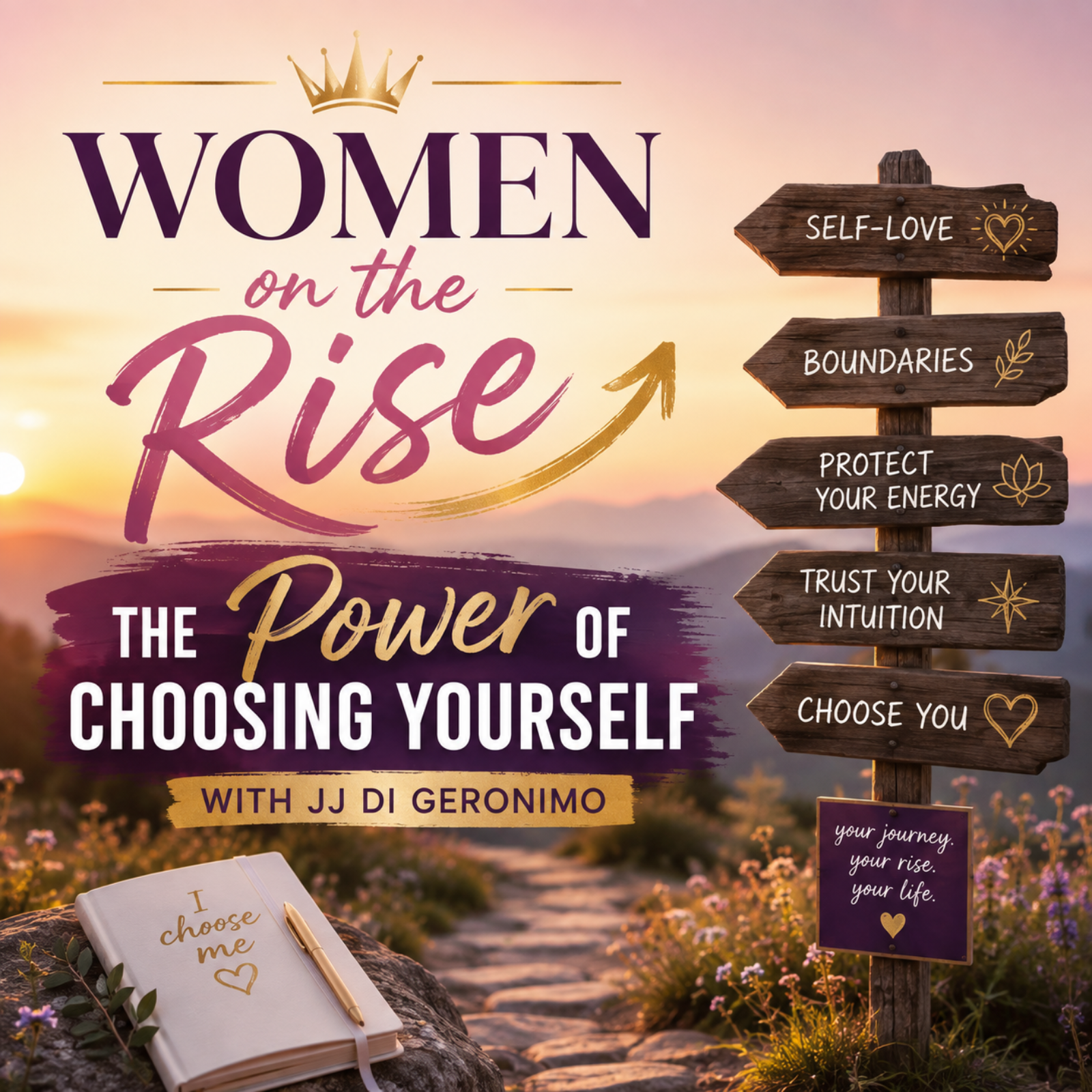
Self-Love, Spiritual Awakening, and Protecting Your Energy
Sometimes the moments that feel like everything is falling apart are actually the moments inviting us to become someone new.
In this episode of the BFF Empowerment Podcast, I sat down with author and speaker JJ DiGeronimo for a powerful conversation about spiritual awakening, self-love, healing, energy, boundaries, and finding the courage to choose yourself.
What made this conversation especially meaningful was that it wasn't simply about becoming more positive. We talked about the deeper work that comes with recognizing patterns, examining why we show up for others the way we do, listening to our intuition, and giving ourselves permission to walk away from situations that no longer serve us.
For women who are accustomed to being everything for everybody, choosing yourself can be one of the hardest—and most necessary—things you learn to do.
Your Crossroads May Be the Beginning of Something New
JJ explained that spiritual awakening often begins with a crossroads.
Maybe you lose a job. A relationship ends. Something unexpected happens. The life you thought you were building suddenly changes, and you're left wondering, Now what?
It's easy to see these moments only through the lens of what we've lost. But JJ offered another perspective: what if the crossroads is also an opportunity?
Sometimes disruption forces us to ask questions we wouldn't have asked while we were comfortable.
What do I really want?
Who am I becoming?
What is this season trying to show me?
What possibilities am I finally willing to explore?
According to JJ, the journey can move from that initial crossroads into curiosity and then seeking—actively looking for the people, information, experiences, and opportunities that help illuminate what's next.
Growth doesn't always arrive looking like growth. Sometimes it arrives looking like an ending.
Healing Requires More Than Helping Everybody Else
One of the most personal parts of our conversation centered around overgiving.
Many women pride themselves on being helpful. We are mothers, partners, friends, caregivers, professionals, entrepreneurs, leaders, and supporters. When somebody needs something, we're often the first person they call.
But there's an important question we don't always ask:
Why am I doing so much for everyone else?
JJ discussed how some women learn early in life to associate being loved with what they can do for other people. As adults, that can turn into constantly giving, fixing, helping, accommodating, and sacrificing while hoping to receive love or validation in return.
That part of our conversation hit home for me.
When you've experienced seasons in which you didn't receive the love you needed, it can be easy to become someone who bends over backward for other people. You give what you wish someone had given you.
But healing eventually requires recognizing that loving other people cannot replace loving yourself.
You shouldn't have to exhaust yourself to prove your value.
Self-Love Can Look Like Saying No
We often make self-care sound soft and relaxing.
Sometimes it is.
Self-care can be reading a book, enjoying fresh air, spending quiet time alone, listening to something uplifting, or simply allowing yourself to rest.
But self-love can also be uncomfortable.
Sometimes self-love sounds like:
No.
Sometimes it means declining an opportunity.
Sometimes it means no longer being available every time someone needs you.
Sometimes it means leaving a relationship or environment that is draining your peace.
Sometimes it means disappointing someone else rather than continuously disappointing yourself.
JJ shared an example of a woman who had agreed to handle bookkeeping for her brother. The actual task only required a few hours, but she spent much more time thinking about it, dreading it, and carrying the mental weight of knowing it needed to be done.
That's an important reminder: something doesn't have to consume hours of your physical time to consume your energy.
When you constantly think about something you don't want to do, dread an obligation, or resent the commitment you've made, the emotional cost can be much greater than the time listed on your calendar.
Protecting Your Energy Starts With Paying Attention
Another major theme of our conversation was frequency and energy.
JJ encouraged listeners to take inventory of what they're consuming and contributing throughout the day.
What are you watching?
What are you listening to?
What are you talking about?
How are you speaking to yourself?
How do you feel after interacting with certain people?
You may not be able to control everything happening around you, but you can become more intentional about what receives your attention.
I shared that I stopped regularly watching the news because constantly consuming negative stories was affecting me. I can still stay informed about what's happening without immersing myself in negativity throughout the day.
The same principle can apply to social media, conversations, relationships, entertainment, and even our own thoughts.
Pay attention to how something leaves you feeling.
Does it energize you?
Does it inspire you?
Does it bring you peace?
Or does it consistently leave you anxious, frustrated, angry, exhausted, or emotionally drained?
Awareness gives you the opportunity to make a different choice.
Stop Talking Yourself Out of What You Already Know
This was another lesson that resonated deeply with me.
Sometimes we already know.
We get that feeling telling us something isn't right, but then our minds begin negotiating.
Maybe it'll work out.
Maybe I should give it another chance.
What if I miss an opportunity?
What will they think if I say no?
Maybe I'm overreacting.
And before we know it, we've talked ourselves into something our intuition was already warning us about.
JJ suggested becoming more intentional about checking in with yourself before agreeing to something. Instead of automatically responding from fear, obligation, or the possibility of missing out, ask whether the opportunity actually feels aligned with you.
That's something I'm continuing to work on myself.
Learning to trust yourself takes practice, especially when you've spent years overriding your own needs for other people.
Peace Can Confirm the Decision You Were Afraid to Make
During our conversation, I shared some of my own experience of finally making a difficult decision to leave a relationship and living situation that had become emotionally draining.
It wasn't necessarily about one dramatic incident. Sometimes an environment simply becomes unhealthy for you.
I had stayed longer than I should have for reasons that made sense to me at the time. But eventually, I had to acknowledge that the situation wasn't bringing me happiness or peace.
Once I made that decision, I felt relief.
That experience taught me something important about self-love: sometimes choosing yourself requires making a decision you wish you had made sooner.
You can't go backward and change when you made the choice.
You can only be grateful that you finally made it.
Starting over isn't always easy. Being single isn't always easy. Changing the life you've become accustomed to isn't always easy.
But neither is living every day in a situation that drains you.
Sometimes the peace you feel afterward tells you everything you need to know.
Finding Your Way Back to Yourself
One of my biggest focuses in this season of my life has been getting back to the things that fill me.
Therapy.
Reading.
Going outside.
Enjoying the air.
Spending time with my son.
Doing work that fulfills me.
Helping others while also remembering that I am one of the people I'm responsible for taking care of.
That last part matters.
You can have a heart for serving others without abandoning yourself in the process.
You can empower people while continuing your own healing.
You can be strong and still need rest.
You can encourage others and still have days when you need encouragement.
You don't have to reach some imaginary finish line of being completely healed before your experiences can help somebody else.
We're all still becoming.
Maybe Your Purpose Has Been Showing Up All Along
We also discussed purpose and the gifts we bring into this world.
People spend years asking, What am I here to do?
Sometimes the answer isn't hidden nearly as deeply as we think.
Look at what you've naturally been drawn toward.
Look at the ways people consistently come to you for help.
Look at what you've survived.
Look at what excites you.
Look at what you could talk about for hours.
Look at what makes you feel useful, fulfilled, and alive.
For me, empowerment has continued to show up throughout my journey. Despite the things I've experienced, I have continually felt called to use my voice and experiences to help other people.
Your purpose doesn't mean your life will always be easy.
Sometimes your experiences help reveal the very gifts you're supposed to use.
You Are Allowed to Choose Yourself
If there's one message I hope women take from this conversation, it's this:
Choosing yourself doesn't mean you don't care about anyone else.
It means you're finally including yourself among the people worthy of your care.
You don't have to say yes because somebody asked.
You don't have to stay because leaving is difficult.
You don't have to keep giving simply because you're good at giving.
You don't have to apologize for protecting your peace.
And you don't have to continue being the version of yourself that everyone else became comfortable receiving.
Pay attention to what fills you.
Pay attention to what drains you.
Listen to yourself.
Trust what you know.
Do the inner work.
Set the boundary.
Say no when you need to.
And when life brings you to another crossroads, don't automatically assume you've reached the end.
You may simply be standing at the beginning of your next chapter.
Listen to the full episode of the BFF Empowerment Podcast for my complete conversation with JJ DiGeronimo about the six phases of spiritual awakening, self-love, raising your frequency, trusting your intuition, setting boundaries, and creating a life that feels aligned with who you are becoming.
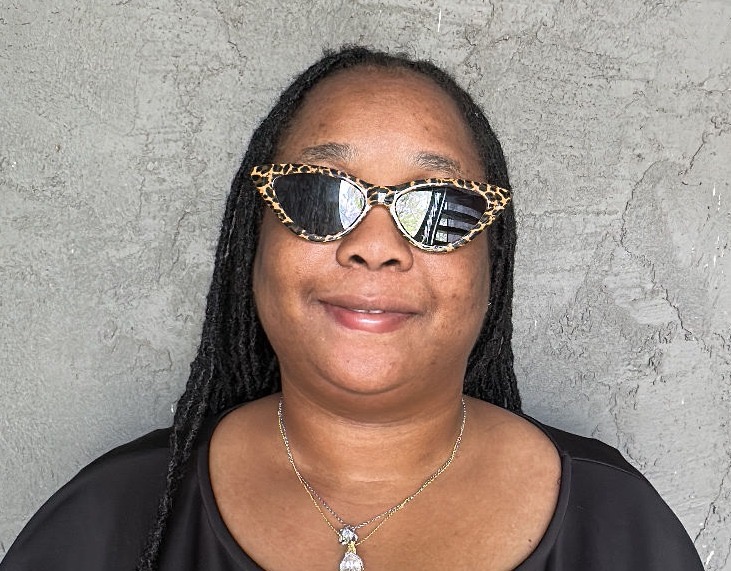
Author/Poet/Motivational Speaker/Entrepreneur/Podcast Host/Pageant Titleholder/Advocate/Women's Empowerment Coach/Mom
Blaque Diamond is a powerhouse of resilience, creativity, and purpose. Known as a motivational speaker, award-winning author, poet, podcaster, and advocate, she has transformed a life marked by adversity into a mission rooted in empowerment, visibility, and hope.
Blind since the age of 15 due to childhood abuse and medical neglect that resulted in irreversible retinal detachment, Blaque Diamond refused to let her circumstances define her limitations. Instead, she embraced her journey with courage and faith, earning the nickname “No Limits” for her unwavering belief that obstacles are not stop signs—but stepping stones.
Also being a survivor of sexual abuse and a 2x time domestic violence survivor, marred her life with strife and tested her endurance and ability to bounce back, but those traumas that were meant to break her only further harden her. Making her unbreakable.
She is a 15-time published author, having written books across multiple genres including memoir, poetry, urban fiction, and children’s literature. Several of her works have received national awards, further solidifying her voice as one that both challenges and inspires. Her writing is deeply personal yet universally relatable, often centering themes of healing, self-worth, survival, and triumph.
Beyond writing and self-publishing books,, Blaque Diamond is also a songwriter, having released 3 R&B EP’s with music that reflects emotional depth, vulnerability, and growth. Each creative outlet she touches becomes another avenue for storytelling and empowerment.
As the host and creator of … Read More